
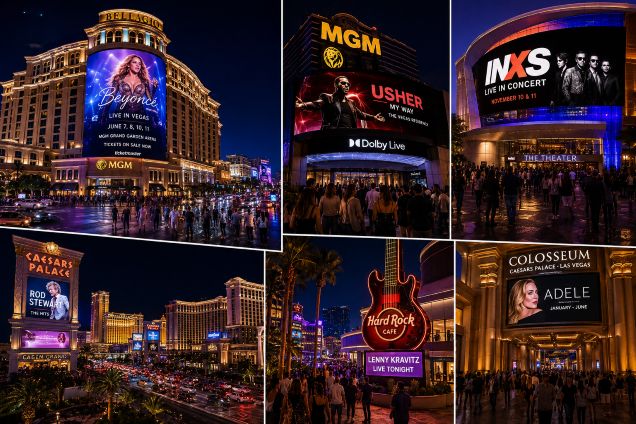
Casino concerts used to feel like side entertainment. Resorts booked musicians mainly to keep guests inside the property longer and hopefully guide them back toward gaming tables afterward. The shows mattered, but they were rarely viewed as the core attraction. In 2026, that dynamic looks very different.
Major operators like Caesars, MGM, and Hard Rock now build large parts of their annual business strategies around live entertainment. Concert calendars influence hotel pricing, tourism campaigns, restaurant traffic, loyalty programs, and even how resorts position themselves in the broader entertainment industry. According to the American Gaming Association, non-gaming revenue has become increasingly important to modern casino resorts as operators diversify beyond traditional gambling models.
Live music is no longer supporting the casino floor. In many ways, it now helps drive it.
Why Casinos No Longer Depend on Gambling Alone
The casino industry has steadily evolved into something much broader than gambling. Modern resorts increasingly function like entertainment districts where hotels, restaurants, nightlife, shopping, and live events all work together as part of the visitor experience.
Changing consumer behavior plays a major role in this shift. Younger travelers often prioritize experiences over gaming itself. Weekend trips are now built around concerts, dining, nightlife, and social-media-friendly events rather than hours spent at slot machines.
According to Deloitte’s travel and hospitality research, experience-driven tourism continues to influence how consumers choose destinations, especially among younger demographics who value immersive entertainment and lifestyle experiences.
That trend has pushed casinos to compete with far more than neighboring gambling properties. Today, they are also competing with music festivals, sports arenas, entertainment districts, and luxury travel destinations for attention and travel spending.
As a result, live music has become one of the most effective ways for resorts to attract visitors who may not even identify as traditional casino customers.
Caesars and the Rise of the Residency Business Model
One of the clearest examples of this evolution can be seen in how Caesars approaches artist residencies. Rather than relying only on occasional headline events, Caesars spreads major entertainment programming throughout the calendar year. The strategy helps stabilize tourism traffic during both busy and slower travel periods while giving the company a more predictable entertainment schedule.
Residencies also create operational advantages beyond ticket sales. Long-term artist partnerships make it easier to coordinate marketing campaigns, travel packages, and loyalty program promotions months in advance.
According to Billboard, Las Vegas residencies have evolved far beyond the nostalgia-driven format they were once known for. Major touring artists increasingly view residencies as financially attractive because they reduce travel demands while allowing for large-scale production consistency.
That consistency benefits casino operators as well. Repeat performances encourage returning visitors, help maintain steady hotel occupancy, and create recurring tourism demand throughout the year. Instead of treating concerts as isolated events, casinos now use them as long-term business anchors tied directly to hospitality revenue.
MGM’s Multi-Night Concert Strategy
While Caesars focuses heavily on year-round residencies, MGM has leaned into multi-night concert runs at venues like Dolby Live. This strategy changes the economics of entertainment in important ways.
A single-night performance may generate strong ticket revenue, but a multi-night run encourages visitors to stay longer and spend more across the property. Fans traveling for several shows are more likely to book hotel rooms, dine at multiple restaurants, visit bars and lounges, and purchase premium experiences during their stay.
Research from PwC’s hospitality and leisure analysis suggests that entertainment-driven tourism often produces broader economic activity because visitors spend across multiple categories beyond the event itself. That effect is especially visible in casino resorts.
Concert weekends frequently increase suite bookings, nightlife activity, food and beverage sales, and retail traffic. Even casino gaming activity can benefit simply because guests remain on property longer between performances. In many cases, these concert runs create what feels like a temporary tourism economy built around the event itself.
Hard Rock Hollywood and Cross-Generational Entertainment
Hard Rock has approached entertainment strategy from another angle: cross-generational programming.
At Seminole Hard Rock Hollywood, the venue regularly mixes legacy performers with newer touring artists in order to appeal to multiple demographics at the same time. The strategy resembles how streaming platforms balance nostalgia content with newer releases to keep broad audiences engaged.
Some visitors travel for artists they grew up listening to decades ago. Others arrive for performers with strong digital followings and younger fan bases. Genre diversity also helps expand tourism reach by attracting different types of travelers throughout the year.
According to Pollstar, live music audiences have become increasingly diverse across age groups as concert tourism continues to grow after the pandemic-era slowdown. That diversity matters for casinos trying to remain culturally relevant instead of targeting only traditional gamblers.
Entertainment now shapes how many visitors perceive a resort brand. Music programming influences customer demographics, social media visibility, and long-term loyalty in ways that go far beyond the casino floor itself.
The Marketing Power (and Risks) of the Entertainment Boom
Concerts now function as major marketing tools for casino operators.
Every large event generates fan videos, influencer content, social media discussion, and press coverage that extends far beyond the physical venue. In some cases, attendees effectively become unpaid marketers by sharing their experiences online.
According to Forbes, experiential entertainment has become one of the strongest drivers of consumer engagement because audiences increasingly value shareable experiences tied to travel and lifestyle identity. For casinos, that visibility is extremely valuable in a crowded tourism market. But the entertainment boom also creates serious challenges.
Artist fees continue to rise, production costs have become more complex, and large-scale concerts require major investments in staffing, logistics, security, and venue operations. Resorts that rely heavily on live entertainment also face financial risk if ticket demand weakens or tourism patterns shift unexpectedly.
Smaller casinos may struggle to compete with the entertainment budgets of larger operators like Caesars and MGM, potentially widening the gap between mega-resorts and regional gaming properties.
Conclusion
Live music has become one of the defining business strategies shaping the casino industry in 2026. Caesars uses year-round residencies to stabilize tourism and encourage repeat visitation. MGM focuses on multi-night concert runs that increase spending across entire resorts. Hard Rock emphasizes cross-generational entertainment designed to maintain cultural relevance and broaden audience appeal.
Together, these approaches reveal how deeply entertainment now influences casino operations. The modern casino floor no longer ends at gaming tables and slot machines. It now extends into concert halls, restaurants, nightlife spaces, luxury hotels, and immersive entertainment experiences that increasingly define what casino tourism looks like today.
